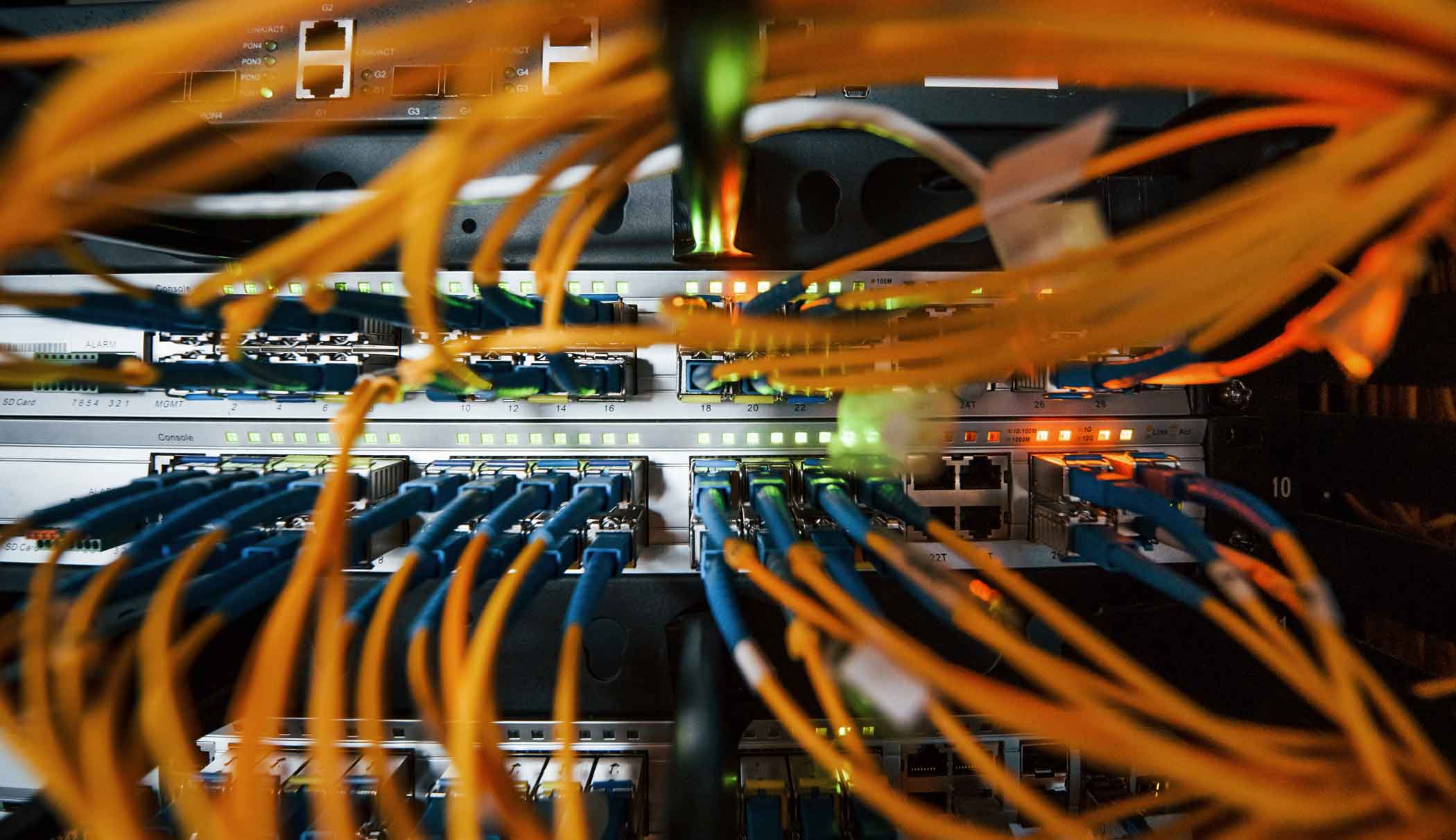
Fiber carries information as light through glass rather than electrical signals through copper. That difference gives it important advantages, but it also makes planning, termination, testing, and physical protection critical. A successful fiber project begins with the application—not with a cable selected in isolation.
Distance changes the cabling decision
Standard balanced copper Ethernet channels are generally designed around a 100-meter maximum, including patching. Long routes across a large property, warehouse, campus, or outdoor area can exceed that limit quickly. Fiber is commonly used to create backbone links over greater distances without placing active network equipment in inconvenient intermediate locations.
This makes fiber a strong option for connecting telecommunications rooms, separate buildings, exterior systems, and remote areas of a facility.
Bandwidth and future growth
A business may install cameras, wireless access points, cloud applications, phones, digital signage, building controls, and other connected technology over time. The backbone must carry the combined traffic. Fiber can provide a scalable path for higher-capacity links and future equipment upgrades when the fiber type and strand count are selected correctly.
Planning spare strands and pathway capacity during the original installation can be more economical than reopening ceilings or underground routes later.
Resistance to electrical interference
Because glass fiber does not conduct electricity, it is not affected by electromagnetic interference in the same way as copper cabling. That can make it useful near motors, electrical equipment, or other noise sources. Its nonconductive nature can also be advantageous for links between buildings, although every project still requires proper grounding, bonding, pathway, and code review for associated components.
Professional installation protects performance
Fiber performance can be damaged by excessive pulling tension, sharp bends, dirty connectors, poor splices, or inadequate enclosure protection. A professional installation should include the right cable for the environment, suitable pathways and termination hardware, clear labeling, and documented testing.
Taylor’s Communications is a licensed low-voltage contractor serving Florida and Georgia with fiber installation, termination, repair, and verification capabilities. Call (904) 779-8900 to plan a fiber backbone or troubleshoot an existing link.